Gentian Net Zero
Tiruchirappalli, Tamil Nadu
Solar, storage, water, waste, carbon capture and AI, working together toward net zero for India.
Application map
One platform idea. Different engineering needs.
Urban capsules are the initial focus. Explore a connected family of biological applications, each with its own design, operating plan and measurement boundary.
Urban algae capsules
Compact installations for campuses, public spaces and commercial sites.
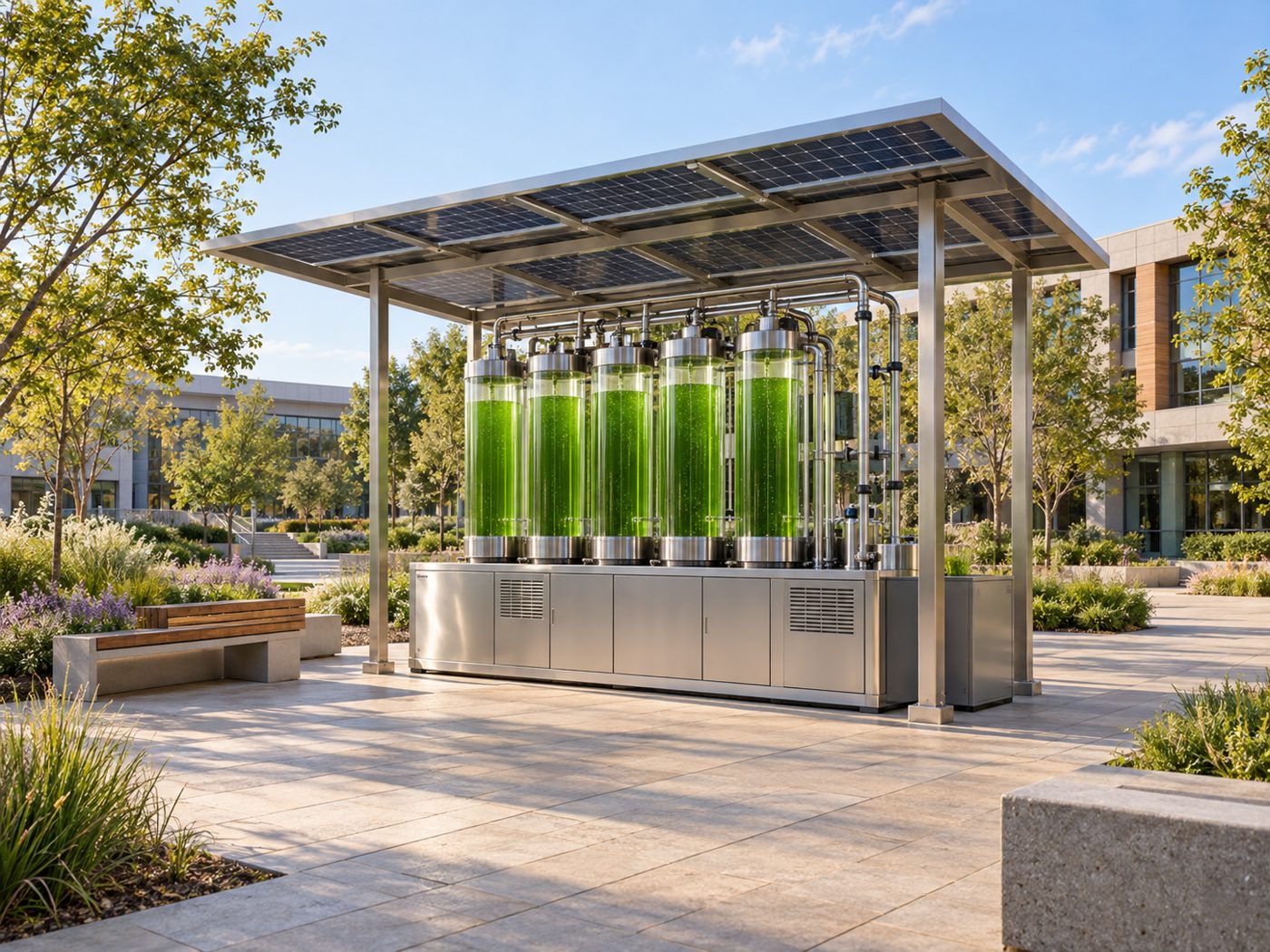
- Site questions
- A suitable site with daylight, safe public access and a maintenance plan.
- What to validate
- CO₂ uptake, culture health, energy, water, uptime and service hours.
- Practical next step
- Define one pilot with a site partner before planning a network.
Industrial carbon capture
A separate engineering track for suitable CO₂-bearing process streams.
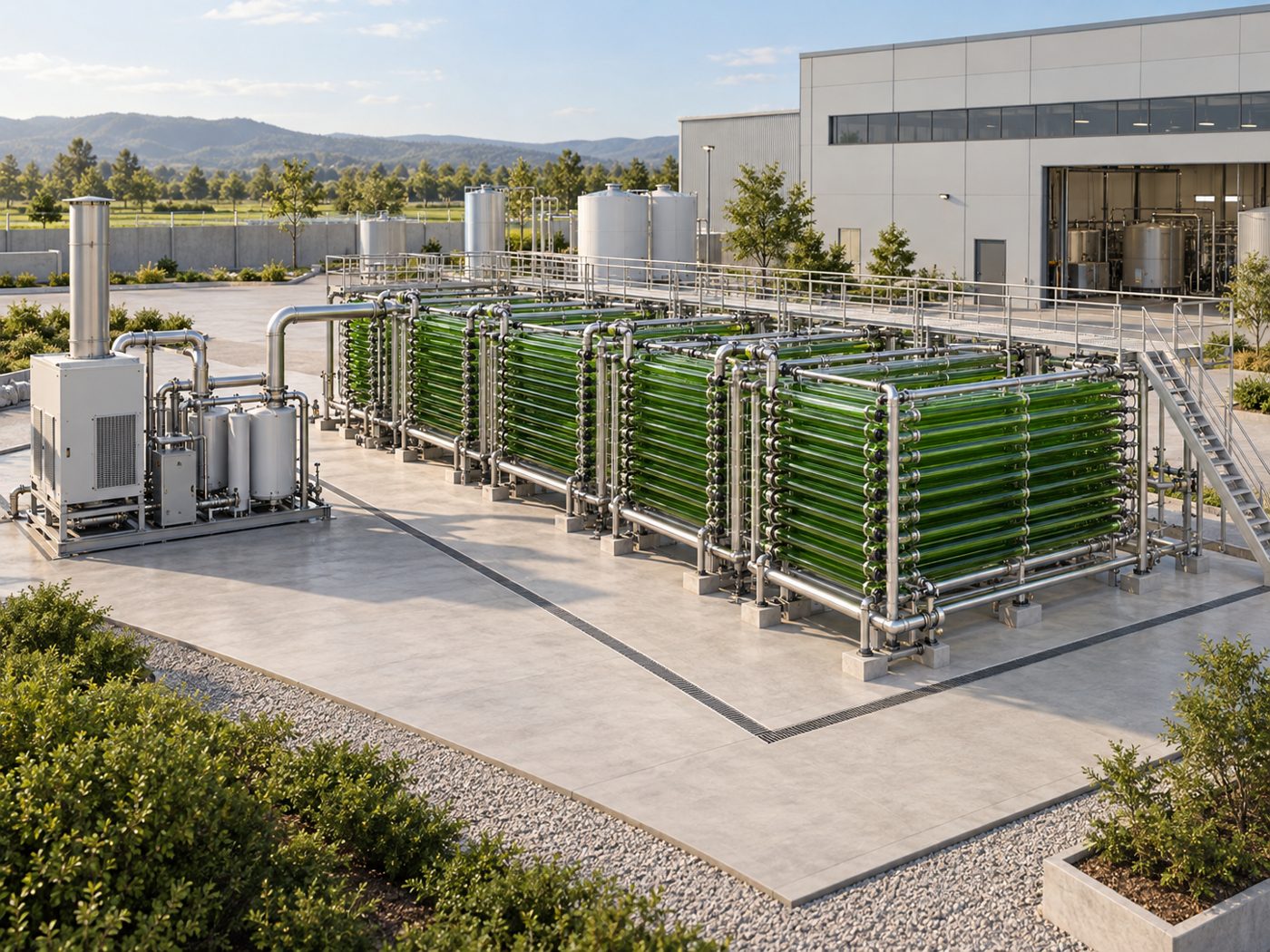
- Site questions
- Gas composition, temperature, contaminants, flow and available space.
- What to validate
- Gas conditioning, biological compatibility, net energy and verified carbon balance.
- Practical next step
- Start with source characterization and engineering review, not urban-capsule output claims.
Indoor algae installations
Study contained biological systems for selected indoor environments.
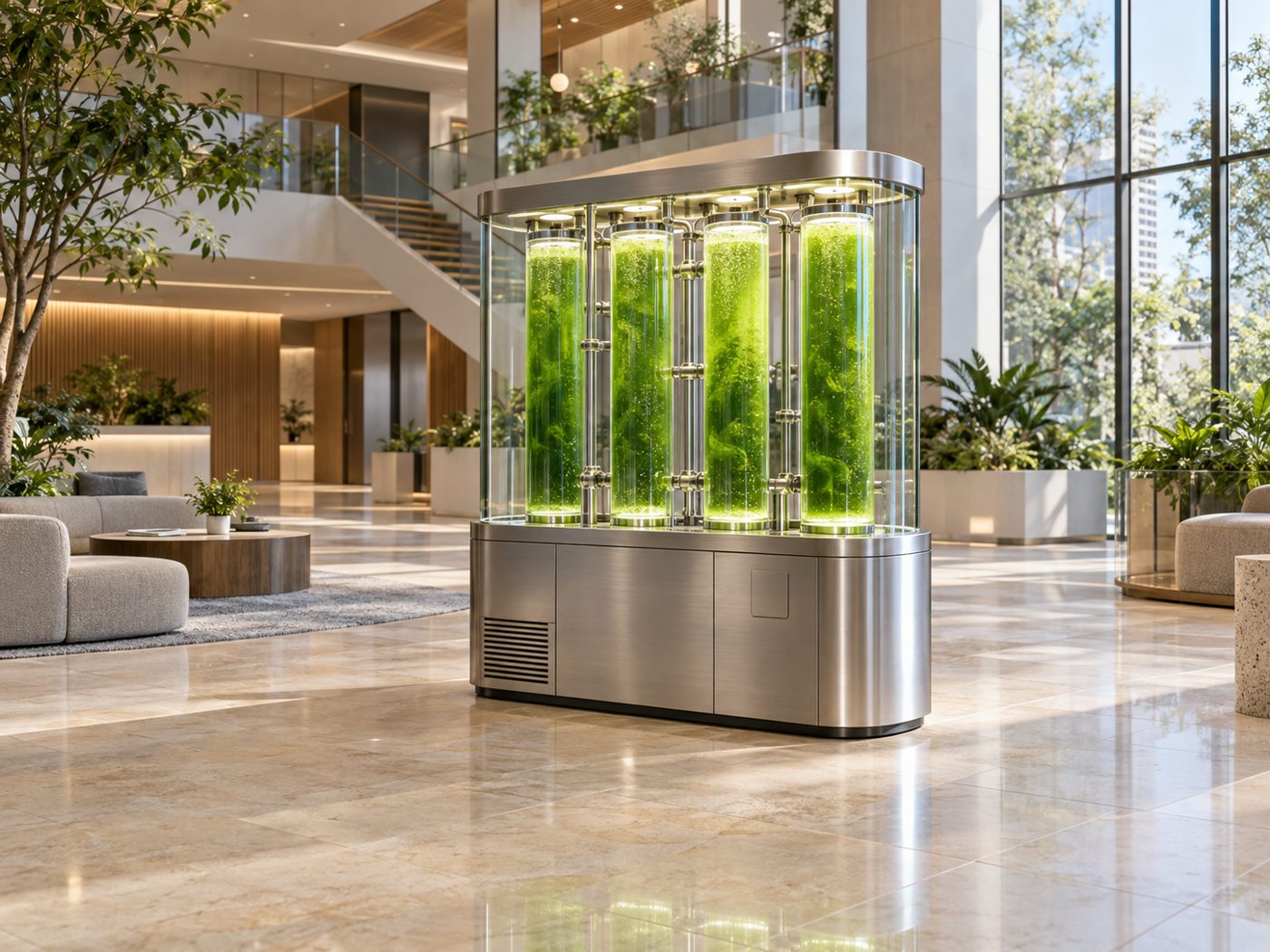
- Site questions
- Ventilation assessment, occupant safety, lighting, hygiene and spill protection.
- What to validate
- Room-level performance, operating demand and safe maintenance.
- Practical next step
- Evaluate alongside ventilation and particle filtration, not as a universal replacement.
Building-integrated panels
Explore how contained algae modules could fit into architectural surfaces.
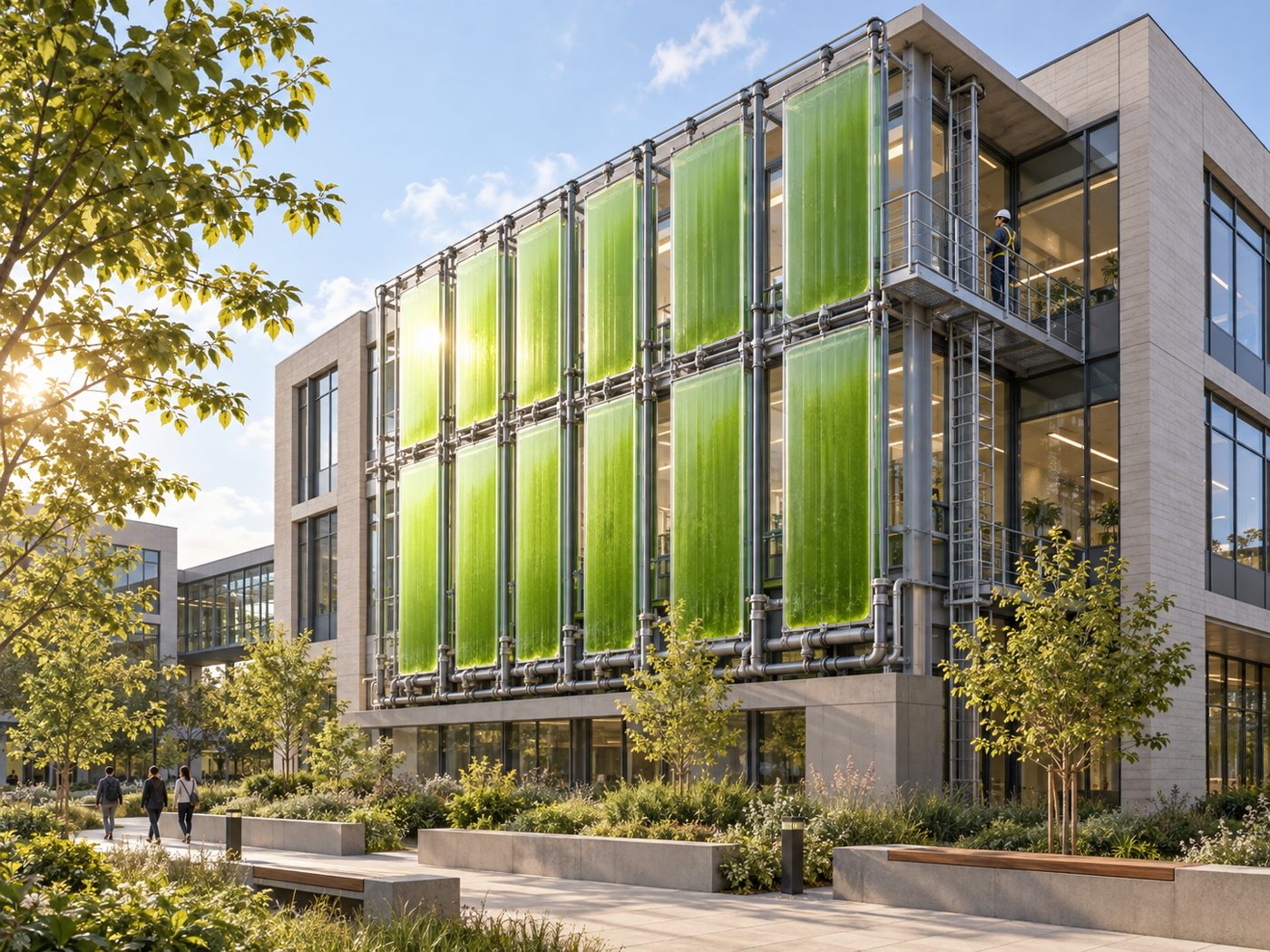
- Site questions
- Structural review, orientation, shading, access, containment and building approvals.
- What to validate
- Biological function plus weathering, leak control and whole-building energy effects.
- Practical next step
- Use engineering-led prototypes before any façade-wide deployment.
Outdoor towers & dividers
Assess visible biological installations for appropriate public settings.
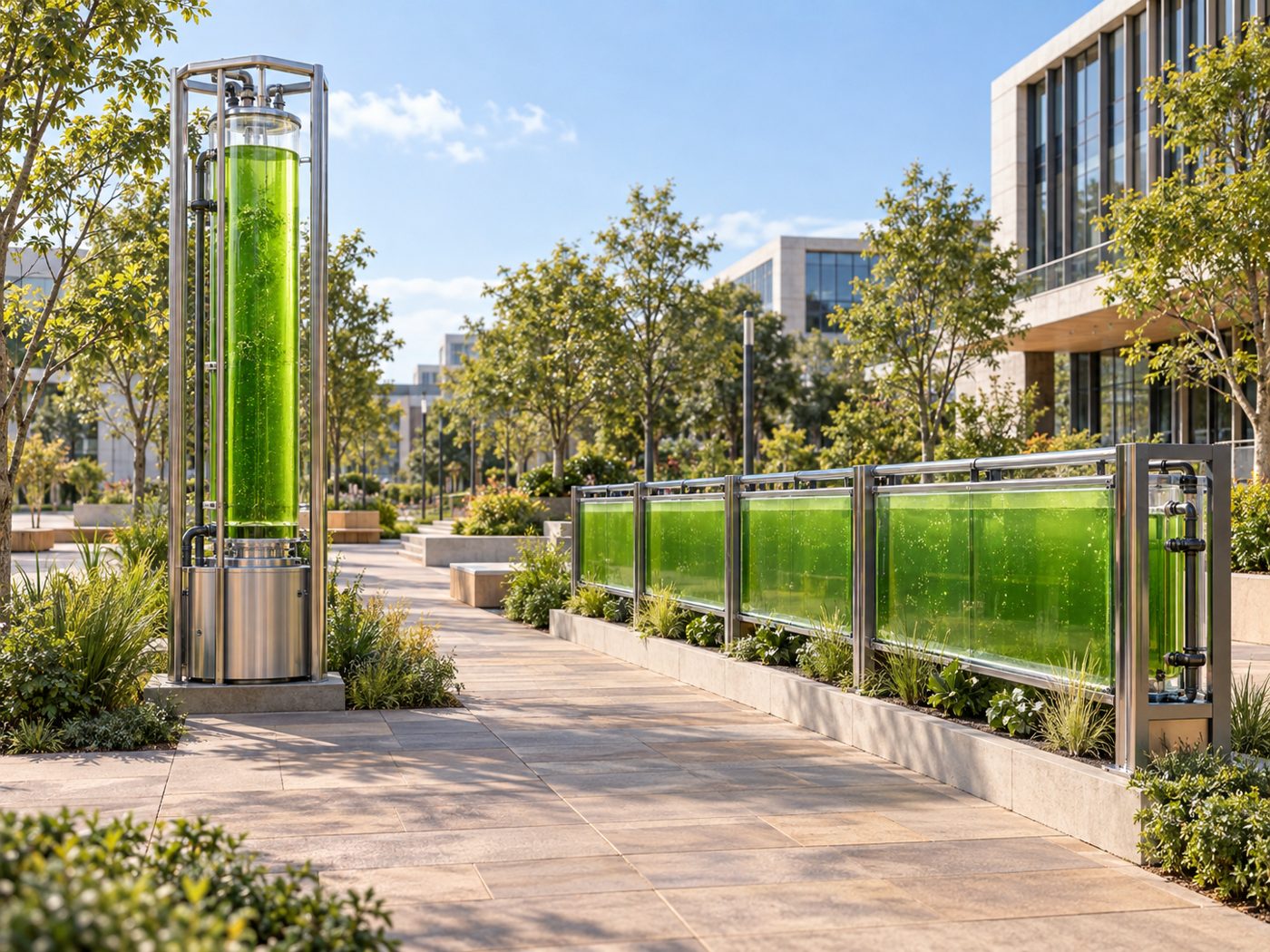
- Site questions
- Airflow, weather exposure, traffic safety and a workable servicing route.
- What to validate
- Local performance under realistic weather, dust and public-use conditions.
- Practical next step
- Choose a test boundary that separates unit performance from city-wide air-quality claims.
Atmospheric CO₂ uptake
Investigate biological capture from ambient air with a full carbon-accounting plan.
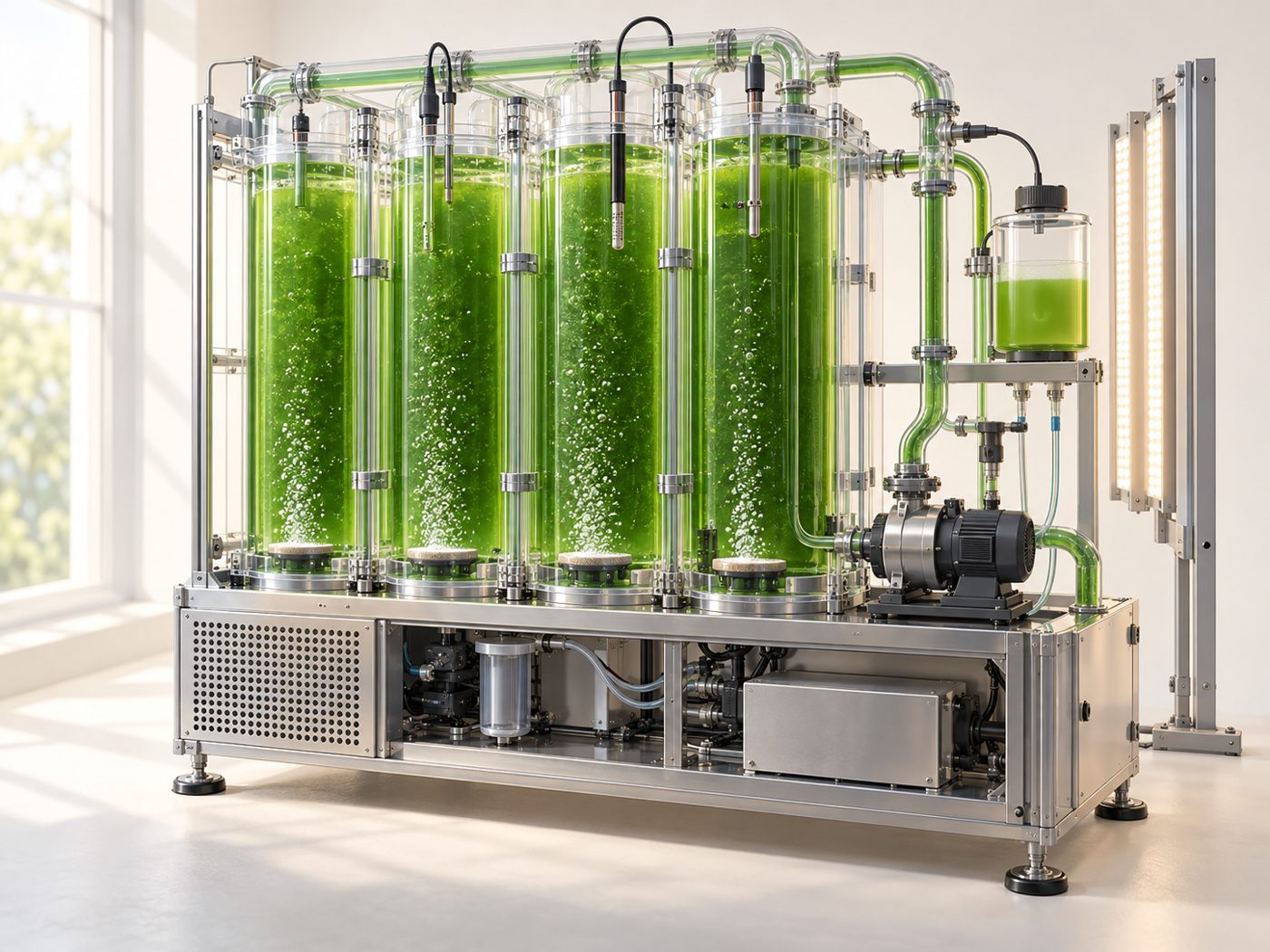
- Site questions
- A defined air-contact method and a credible route for harvested biomass.
- What to validate
- Net removal after energy and materials, with carbon origin and destination recorded.
- Practical next step
- Keep capture, utilization and durable storage as separate claims until each is demonstrated.
Rail & metro: fresh air first
Engineer fresh-air supply and airflow for occupants, with algae only as a complementary option.
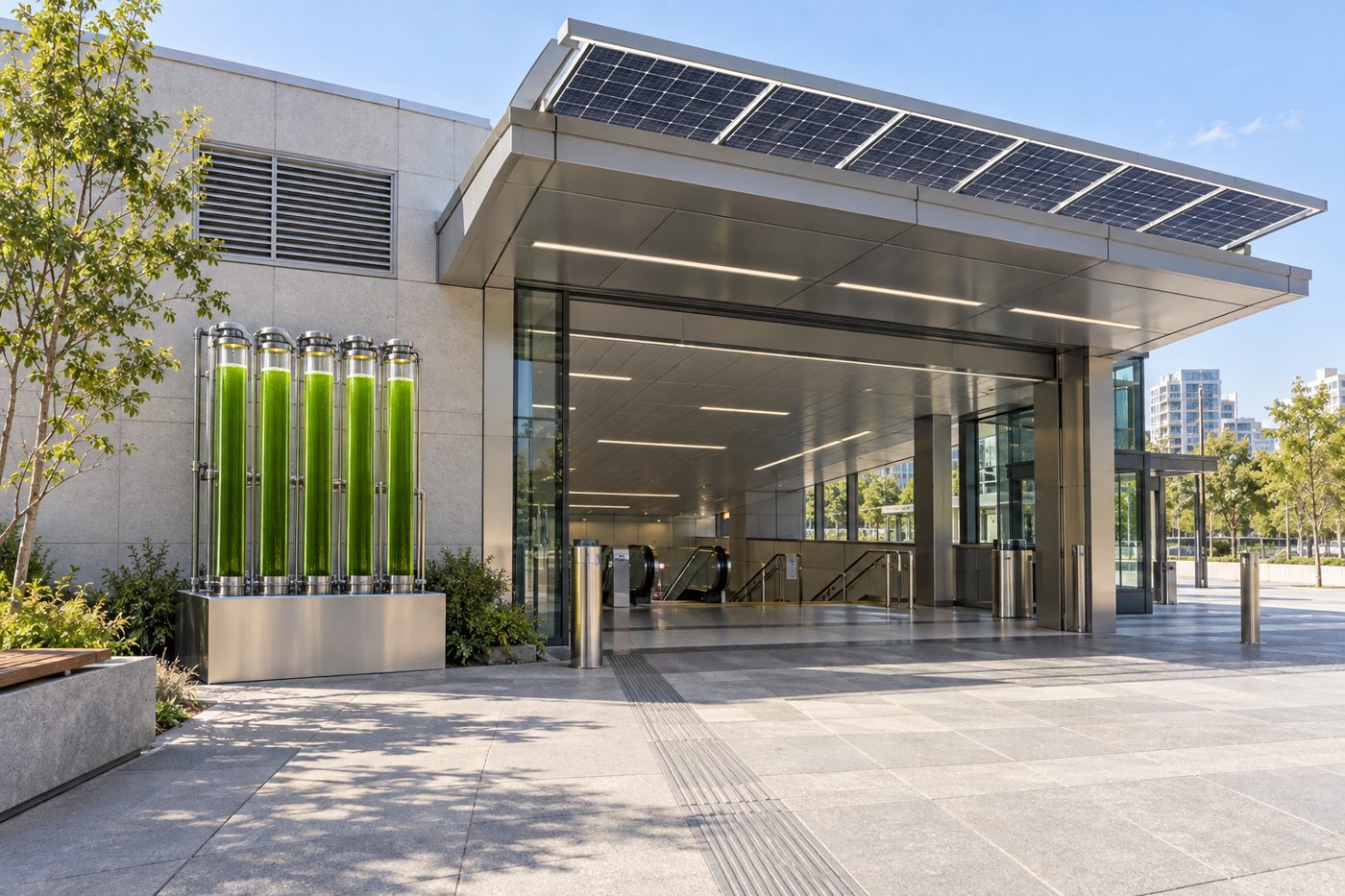
- Site questions
- Station-team design of outdoor-air intake, filtration, fans and distribution; protect evacuation routes and smoke-control functions.
- What to validate
- Outdoor-air delivery, air distribution, particles, reliable operation and total energy demand. Any biological contribution is evaluated separately.
- Practical next step
- Start with one approved station zone. Assess solar on suitable sunlit above-ground surfaces. Select any turbine only after a resource, structure and noise study; do not assume useful tunnel power.
Station energy and air supply
Design the airflow. Then assess the energy.
A station pilot starts with the operator’s fresh-air requirement and an engineered ventilation design. Reliable station power and any backup must match the operating and safety duties. Assess the whole electrical load, including any underground culture lighting. Solar generation above ground may offset suitable electrical loads. A turbine is optional until its type, resource and net benefit are established; equipment must not obstruct station ventilation.
Different jobs